How to Help a Dachshund Lose Weight Safely
A practical weight-loss plan for dachshunds: body condition, measured meals, treat control, activity, and when unexplained weight needs a veterinary check.
Start with body condition, not a target number
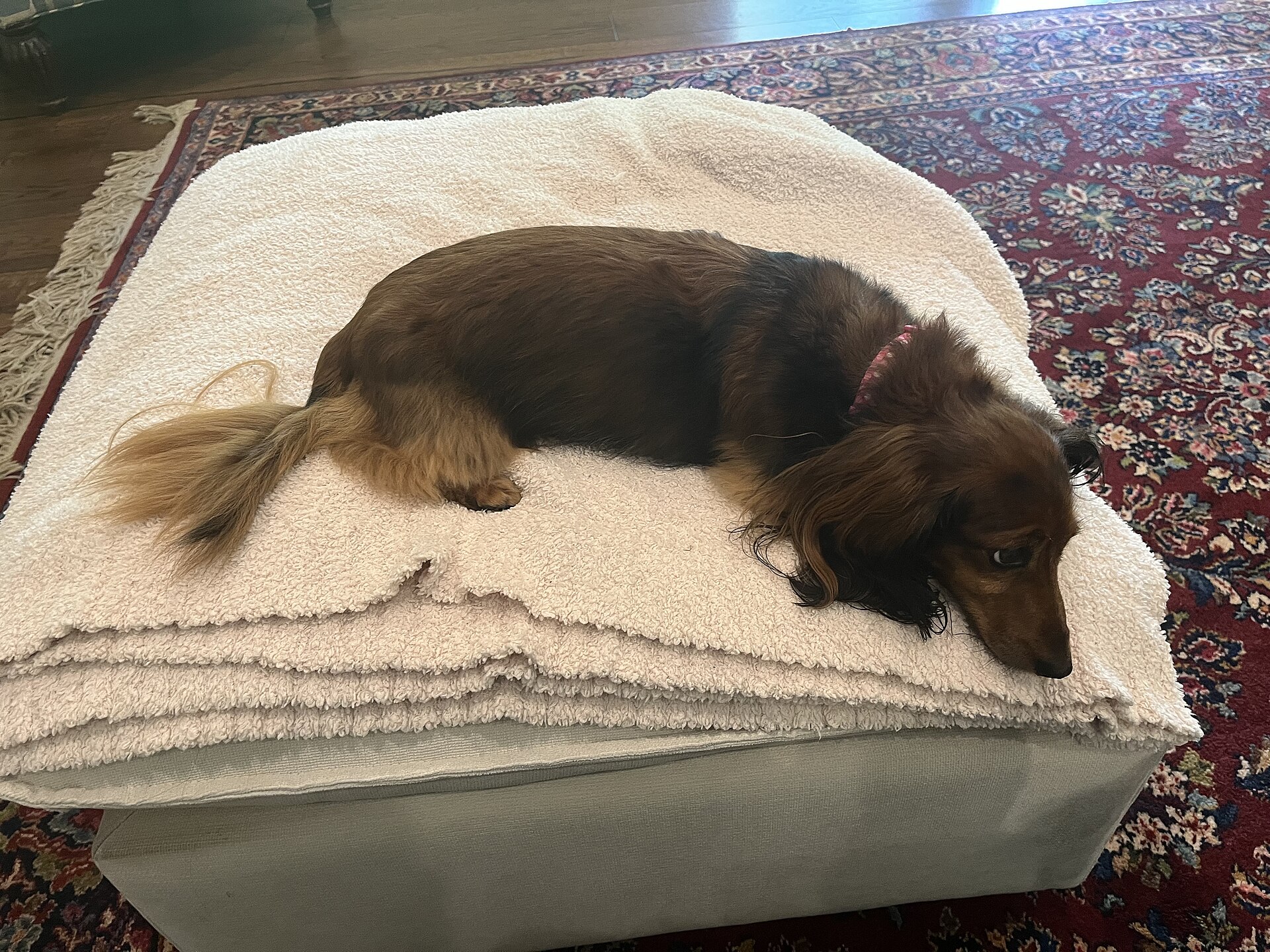
A dachshund’s healthy weight depends on frame, age, muscle, sex, and health. The scale is useful, but it cannot tell you whether a dog is carrying too much fat or losing muscle. Look for a visible waist from above and an abdominal tuck from the side; the ribs should be easy to feel under a light covering.
Ask your veterinarian to score your dog and set a target if you are unsure. A sudden gain or loss, increased thirst, reduced appetite, vomiting, diarrhea, or unusual tiredness should be investigated rather than treated as a simple calorie problem.
Measure the current routine
For three to seven days, record everything that enters the dog’s mouth: meals, treats, dental chews, scraps, training rewards, supplements, and food used to give medication. Weighing food with a kitchen scale is more consistent than filling a scoop by eye.
Also record the food label, the number of meals, the dog’s weight, and the activity pattern. This gives your veterinarian or nutrition professional a useful starting point and exposes the small extras that are easy to overlook.
Make gradual changes
- Confirm the target and feeding plan with your veterinarian.
- Keep meal times consistent and measure each portion.
- Set aside part of the daily food for training instead of adding separate treats.
- Choose lower-calorie rewards when appropriate, but do not change therapeutic or prescription diets without advice.
- Reweigh at a consistent interval and record the trend rather than reacting to one reading.
Exercise helps, but it is not the whole plan
Regular walking and play support fitness and behavior, but adding a long walk does not automatically compensate for an overfed dog. Increase activity gradually and choose movement that does not cause pain, repeated jumping, overheating, or next-day stiffness.
For dachshunds with back concerns, use controlled walking, sniffing, training, and ground-level games. Ask a veterinarian about exercise if your dog has pain, weakness, a previous IVDD episode, or another medical condition.
Common mistakes
- Cutting food sharply without professional guidance.
- Changing food and exercise at the same time, making it hard to know what helped.
- Ignoring treats because the main meal is measured.
- Using a breed-average weight as a diagnosis.
- Continuing a plan despite lethargy, vomiting, diarrhea, or unexplained weight change.
Bottom line
Safe weight loss is a measured, gradual process based on body condition and the individual dog. Track the full routine, use a consistent plan, protect the back during activity, and involve your veterinarian when the weight problem is significant or unexplained.
Related products for dachshund owners
Disclosure: This guide contains Amazon affiliate links.
When to call your veterinarian
This guide is general information, not a diagnosis. Sudden severe pain, weakness, dragging legs, loss of bladder or bowel control, collapse, breathing trouble, or rapidly worsening symptoms need prompt veterinary advice.
Read the veterinary disclaimer →Sources
- WSAVA Body Condition Score chart
- Association for Pet Obesity Prevention: Pet obesity information
- American Kennel Club: Dachshund breed information
Browse all dachshund guides → · Contact the editorial team →